 Marine Mitra
Why are white faecal strings floating on my pond surface at 65 days?
త్వరిత సమాధానం · Quick answer
White faecal strings on the pond surface mean white faeces syndrome (WFS), which usually appears after 60 days of culture and cuts shrimp survival by 20 to 30 percent. The strings come from damaged hepatopancreas tubules, often linked to vibrio, EHP, blue-green algae, or loose shell syndrome.
మీ చెరువు పుస్తకం ఫోన్లో · Keep your pond's book on your phone Pond Book · Google Play
Why White Faecal Strings Are Appearing in Your Pond
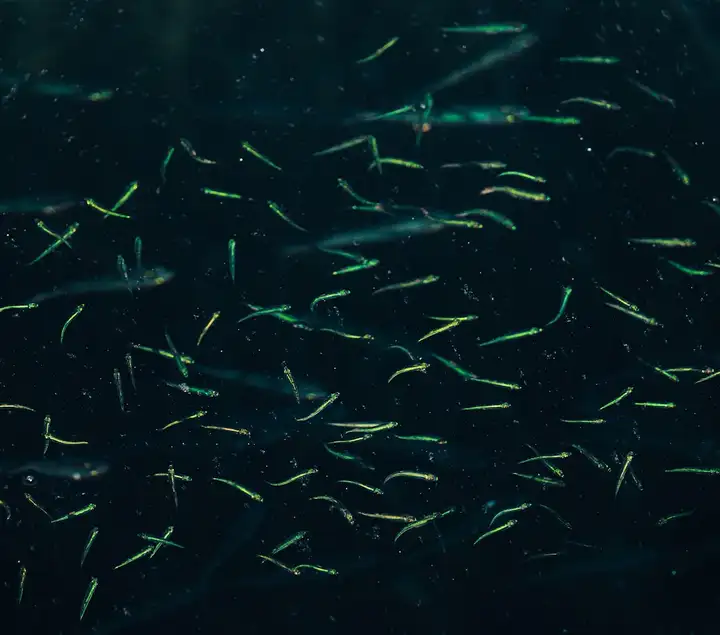
It is 65 days into your vannamei crop in Krishna district. The morning aerator check looks normal, but as you walk along the upwind bund you see thin white and golden-brown strings drifting in clusters on the surface. The strings are not feed waste. They are faecal threads from shrimp whose digestive system is breaking down — and white faeces syndrome (WFS) has already started reducing your survival.
Why White Faeces Syndrome Happens in Your Pond
WFS usually shows up after 60 days of culture and may continue till harvest. Affected shrimp have a white or golden-brown intestine, eat less than the normal feed dose, and grow slower than expected. The condition has been linked to vermiform gregarine-like bodies in the gut, vibrio bacteria in the haemolymph, six fungal species including Aspergillus and Fusarium, blue-green algae blooms, EHP infection, and loose shell syndrome occurring together. Histology shows damage to the hepatopancreas tubules with haemocyte encapsulation.
The condition that triggers WFS on most farms is high stocking density combined with deteriorated pond bottom and an unstable plankton bloom past day 60.
Steps to Take Right Now
- Reduce daily feed by 20 to 30 percent and use the feeding tray result to set the next meal — overfeeding worsens WFS fast.
- Carry out 20 percent water exchange from a screened, aged reservoir to dilute the bacterial load and break the bloom cycle.
- Apply lime at 50 to 100 kg/ha if morning alkalinity is below 80 ppm, and dose dolomite to stabilise pH between 7.5 and 8.5.
- Stop using any crustacean-based fresh feeds — they multiply the gut pathogen load.
- Sample 10 shrimp by cast net every two days, check gut colour, and stop the practice that worsens the trend.
Field Observation
In our monitoring across Andhra Pradesh and Tamil Nadu farms, WFS-affected ponds that immediately reduced stocking density carryover, improved water exchange, and stopped overfeeding recovered 60 to 70 percent of expected harvest weight, while ponds that ignored early signs lost 25 to 30 percent of survival.
Related Guides
- Can blue-green algae in my pond cause white faeces syndrome?
- What water exchange rate helps recover a pond with white faeces signs?
- What disinfection step kills EHP spores during pond preparation?
- Why is my shrimp's hepatopancreas turning yellowish-white, and how does it correlate to Yellow Head Virus (YHV)?
 Why does vibrio infection get worse in higher salinity water?