 Marine Mitra
What disinfection step kills EHP spores during pond preparation?
త్వరిత సమాధానం · Quick answer
EHP spores need lime CaO at 6,000 kg/ha applied to a moist pond bottom for 7 days, followed by drying in direct sunlight for at least 15 days. Skip this step and your next vannamei crop will show the same size variation at 60 days of culture, with shrimp stuck below 8 grams.
మీ చెరువు పుస్తకం ఫోన్లో · Keep your pond's book on your phone Pond Book · Google Play
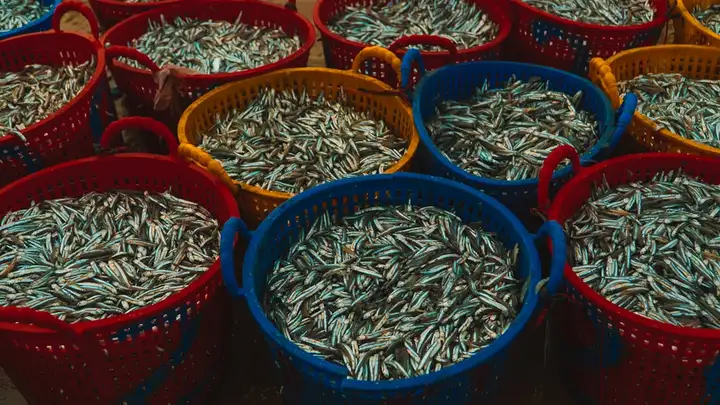
How to Kill EHP Spores During Pond Preparation
It is the end of a vannamei crop in Nellore. You harvest at day 110, but instead of a uniform 25-gram catch, you get a mix of shrimp from 6 grams to 18 grams in the same pond. The feed bill was full but the harvest weight is not. Hepatopancreatic microsporidiosis caused by Enterocytozoon hepatopenaei (EHP) was sitting in the pond, hidden, draining nutrition from your shrimp. If you do not kill the spores before the next stocking, the next crop will repeat the same losses.
Why EHP Survives Normal Pond Preparation
EHP spores are roughly 1 micron in size and have a thick wall that resists ordinary disinfection. The pathogen lives only inside the tubule cells of the hepatopancreas — the organ that absorbs nutrition from feed. When EHP-infected shrimp die or get cannibalised, the spores release into pond sludge and survive there until the next batch of shrimp eats infected debris. EHP does not need an intermediate host. Direct shrimp-to-shrimp transmission through cannibalism and shared water is enough to wipe out the next crop's growth potential.
The condition that triggers EHP carryover on most farms is incomplete sludge removal combined with a fast turnaround between crops.
Steps to Disinfect Against EHP
- Drain the pond and remove all black sludge to a trench far from the pond site.
- Apply quicklime CaO at 6,000 kg/ha across the moist pond bottom and bunds. The high alkalinity from CaO raises pH above 12, which damages the spore wall.
- Hold the pond moist with the lime in place for 7 days, then expose the bottom to direct sun for 15 days until the soil cracks.
- Refill from a screened reservoir, age the water 7 days, and only stock SPF post-larvae from a hatchery that has tested its broodstock for EHP.
- Never feed live polychaetes, clams, or oysters to broodstock — these are the most common EHP entry route into the production chain.
Field Observation
In our monitoring across Krishna and West Godavari farms, ponds that applied 6,000 kg/ha CaO and held a 30-day fallow showed average harvest weight 30 to 40 percent higher than back-to-back stocked ponds without the lime treatment.
 How long should I keep my pond dry after a WSSV outbreak before stocking again?
 How does EHP make my shrimp more vulnerable to white gut and vibrio?
 What are the main prawn diseases I should know as a farmer?