 Marine Mitra
How long should I keep my pond dry after a WSSV outbreak before stocking again?
త్వరిత సమాధానం · Quick answer
Keep the pond dry for at least 30 days after a WSSV outbreak — and use that time to remove all black sludge, plough the bottom, dose with chlorine at 30 ppm, then lime at 1,000–2,000 kg/ha based on soil pH. Skipping any one step leaves enough virus in the bottom to crash your next crop within 7 days.
మీ చెరువు పుస్తకం ఫోన్లో · Keep your pond's book on your phone Pond Book · Google Play
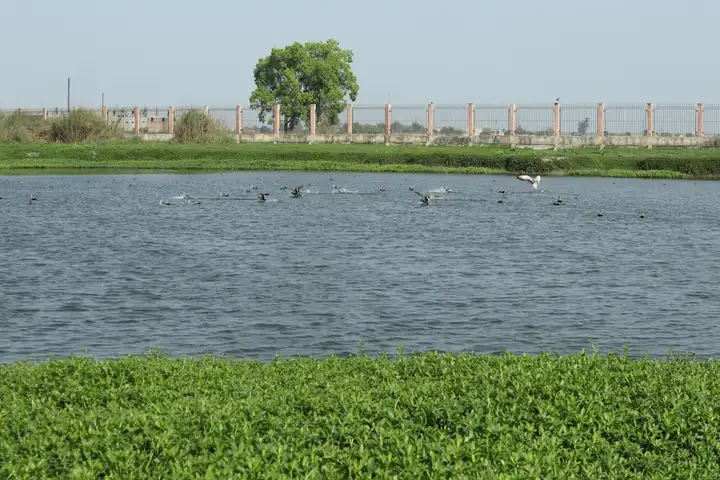
How Long to Keep Your Pond Dry After WSSV
It is the morning after a total wipe-out. Dead shrimp float across your pond in West Godavari, the carapace of every one carrying the small white spots. The neighbour two ponds over already lost his crop three weeks back. Now you must decide how long to leave the pond empty before stocking again — and rushing this decision is the single biggest reason farms get hit twice in one season.
Why a Quick Restock Fails
WSSV is a 120 to 150 nm double-stranded DNA virus that hides inside dead shrimp tissue, organic sludge, and even in carrier crabs walking the bunds. The virus does not just float in water. It sits in the black layer at the pond bottom waiting for the next batch of shrimp to eat infected debris. If you refill and stock too soon, healthy post-larvae catch the virus by cannibalism within days — and mortality reaches 100 percent inside 3 to 7 days of clinical signs.
The condition that triggers the second crash on most Andhra Pradesh farms is a half-cleaned pond bottom with leftover sludge and a rushed 7 to 10 day turnaround.
Steps to Reset the Pond Properly
- Drain the pond completely on day one. Do not pump the contaminated water into a shared canal — your neighbours will get hit next.
- Remove every kilogram of black sludge to a trench far from the pond site. If sludge stays on the bunds, monsoon rain will wash the virus straight back in.
- Plough the dry bottom and let it bake under direct sun for 15 to 20 days until the soil cracks.
- Apply chlorine at 30 ppm using calcium hypochlorite to kill remaining virus, then lime the bottom at 1,000 kg/ha for soil pH above 6, or up to 2,000 kg/ha if soil pH is between 5 and 6.
- Refill from a screened reservoir using a 60-mesh inlet filter, age the water 7 days, then re-test before stocking.
Field Observation
In our monitoring work across Nellore and Krishna district farms, ponds that fallow at least 30 days with full sludge removal show survival rates 35 to 40 percent higher than ponds restocked inside two weeks of an outbreak.
Related Guides
- What is white spot disease and how does it kill shrimp in 3 to 7 days?
- The Exact Pond Parameters You Need to Stop WSSV and AHPND in Shrimp Farms
- What is the fastest way to confirm early-stage WSSV using pond-side PCR kits before mass mortality begins?
- How long does the White Spot Syndrome Virus survive in the benthic sludge of ponds after a failed harvest?
 How does EHP make my shrimp more vulnerable to white gut and vibrio?
 What disinfection step kills EHP spores during pond preparation?