 Marine Mitra
What is the tiger shrimp (Penaeus monodon) feeding schedule by DOC?
త్వరిత సమాధానం · Quick answer
CIBA Package 2021 verified tiger shrimp (P. monodon) feeding schedule by DOC: Day 1 (0.02g): 50% body weight, 2 meals/day; Day 15 (0.95g): 10%, 2 meals; Day 30 (2.90g): 8%, 3 meals; Day 45 (7.00g): 6.4%, 3 meals; Day 60 (11.00g): 4.9%, 4 meals; Day 75 (16.50g): 3.7%, 4 meals; Day 90 (24.30g): 3.0%, 5 meals; Day 105 (32.00g): 2.3%, 5 meals; Day 120 (35.00g): 2.3%, 5 meals. Feed has 35-40% protein, 3-5% lipid, 3-4 hour water stability.
మీ చెరువు పుస్తకం ఫోన్లో · Keep your pond's book on your phone Pond Book · Google Play
Source — CIBA Package of Aquaculture Practices 2021 verified
The tiger shrimp (Penaeus monodon) feeding schedule below is directly from the ICAR-CIBA Package of Aquaculture Practices 2021, Table 22.2.
Tiger shrimp feed requirements (verified)
From CIBA Package 2021:
"The tiger shrimp is fed with a sinking pelletted feed containing 35-40% protein and 3-5% lipid and having water stability for 3-4 hours."
Feed specifications:
- Crude protein: 35-40%
- Lipid: 3-5%
- Water stability: 3-4 hours (sinking pellet)
Verified feeding schedule by DOC
Directly from CIBA Package 2021, Table 22.2:
| DOC | ABW (g) | Daily feeding rate (% of ABW) | Feeding frequency (per day) |
|---|---|---|---|
| 1 | 0.02 | 50.0 | 2 |
| 15 | 0.95 | 10.0 | 2 |
| 30 | 2.90 | 8.0 | 3 |
| 45 | 7.00 | 6.4 | 3 |
| 60 | 11.00 | 4.9 | 4 |
| 75 | 16.50 | 3.7 | 4 |
| 90 | 24.30 | 3.0 | 5 |
| 105 | 32.00 | 2.3 | 5 |
| 120 | 35.00 | 2.3 | 5 |
Critical species difference — NOT same as vannamei
This is the tiger shrimp (P. monodon) schedule. The CIBA P. vannamei schedule is different:
- Vannamei: 16% body weight initially → 2% at 15 g
- Tiger shrimp at 15 g (Day 60-75 approx): 4-5% body weight
Why the difference: Tiger shrimp grows larger (target 30-35 g at harvest) and is more benthic in behaviour. Vannamei reaches market size at 20-25 g and is a column feeder.
Feed delivery method
Directly from CIBA:
"Feeding should be avoided near the drain and aerator. In ponds with sandy bottom, broadcasting is preferred while in those with loamy bottom, tray feeding is better. Check trays are used to monitor the feed consumption and the feeding ration is adjusted accordingly."
Pond bottom type guides feeding method:
- Sandy bottom: broadcasting (scattering feed across pond)
- Loamy bottom: tray feeding (feed placed on trays)
Why: On sandy bottom, broadcasting works because feed remains accessible. On loamy bottom, feed sinks into mud and is lost — tray feeding keeps it on accessible surface.
Important — first month follows table, then adjust
From CIBA:
"Recommended feeding rate is followed during the first month of culture; later feeding ration is adjusted with the help of check tray analysis."
Practical approach:
- Days 1-30: follow the CIBA table strictly
- Days 30+: use check tray monitoring (Special Publication 60 points system) to fine-tune
This prevents both overfeeding (waste, water pollution) and underfeeding (slow growth, FCR worsens).
Sampling frequency
From CIBA Package 2021:
"To assess the growth rate and biomass of stock, sampling with cast net is done biweekly. Analysis of the gut content of the shrimp gives an indication of the feeding conditions."
Standard practice:
- Cast net sampling: every 14 days (biweekly)
- ABW measurement: average of 100 shrimp per sample
- Gut content analysis: indicates feeding status (full gut = good; empty gut = problem)
What this schedule prevents
- Overfeeding early — 50% body weight at Day 1 seems high but the shrimp are tiny (0.02g each). Total feed is small. Underfeeding early causes weak start.
- Underfeeding mid-cycle — At Day 60 (4.9% body weight, 4 meals), the shrimp are 11g and need consistent nutrition for the major growth phase.
- Overfeeding late — At Day 120 (2.3% body weight), shrimp are 35g and approaching harvest. Lower feeding rate matches actual consumption.
Feed quality matters as much as quantity
From CIBA:
"Wet/moist feed should be avoided as far as possible since it could be potential source of pathogen."
Wet or moist feeds present pathogen contamination risk. Always use dry, properly stored commercial pellet feed.
Storage rules (Special Publication 60 verified)
- Storage maximum: 3 months
- Cool, dry, ventilated area
- Not directly on concrete
- Wooden pallets
- No direct sunlight
- FIFO management
The entire feeding programme depends on quality feed — bad storage destroys the nutritional value before the shrimp ever eat it.
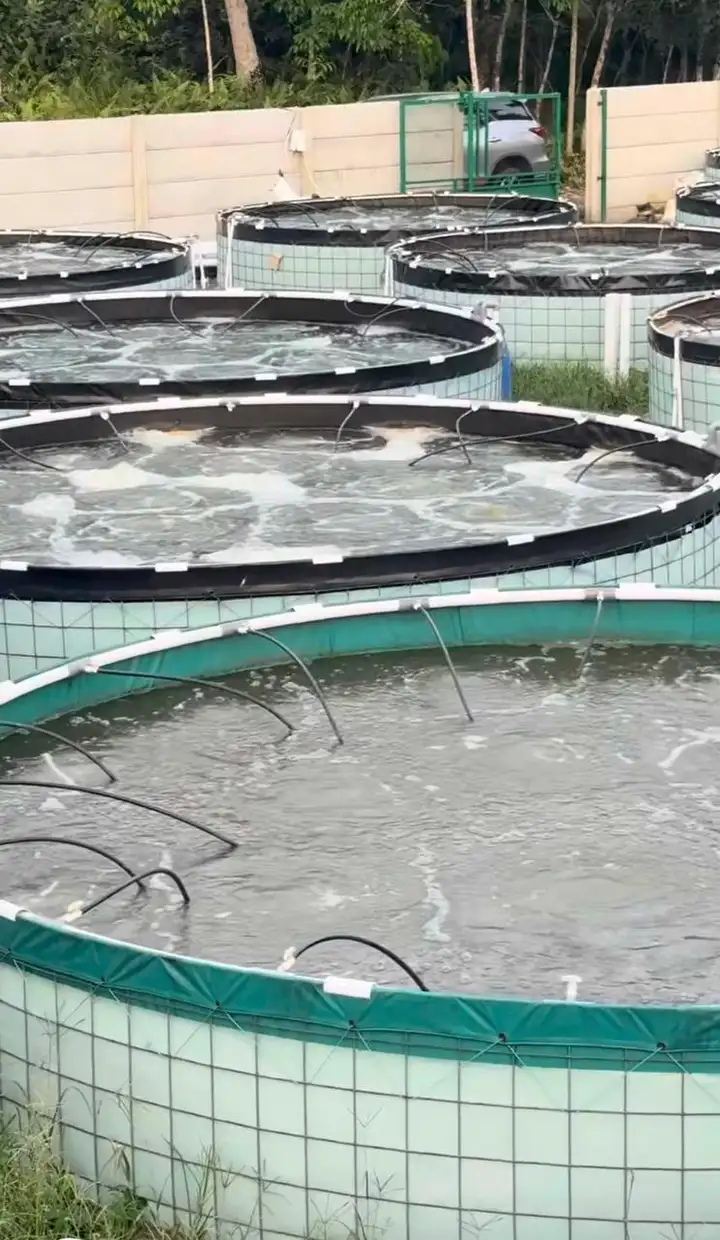 What is the effect of protein level on Penaeus indicus biofloc system?