 Marine Mitra
What is the effect of protein level on Penaeus indicus biofloc system?
త్వరిత సమాధానం · Quick answer
CIBA 2021 verified peer-reviewed research (Panigrahi et al., Fish Shellfish Immunol 119: 31-41) examined cellular and molecular immune response and production performance of Indian White Shrimp (Penaeus indicus, H. Milne-Edwards 1837) reared in biofloc-based system with different protein levels of feed. Anand et al. (Aquaculture 542: 736807) also published on Penaeus indicus nursery rearing optimisation of dietary protein levels and stocking densities under different management regimes.
మీ చెరువు పుస్తకం ఫోన్లో · Keep your pond's book on your phone Pond Book · Google Play
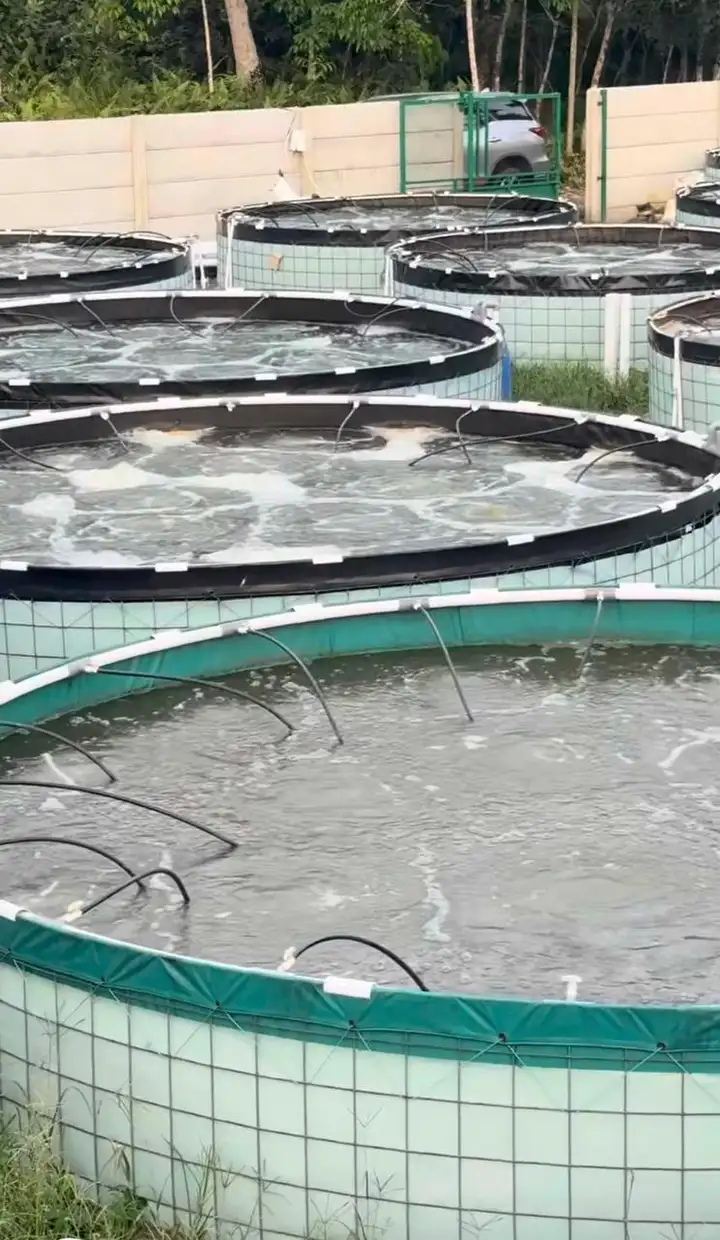
Source — CIBA Annual Report 2021 verified peer-reviewed publications
Two peer-reviewed publications from CIBA 2021 document the protein optimisation research for Penaeus indicus (Indian White Shrimp):
Publication 1 — Biofloc immune response and production
Directly cited in CIBA Annual Report 2021 publications list:
"Panigrahi, A., Das, R.R., Sundaram, M., Sivakumar, M.R., Jannathulla, R., Lalramchhani, C., Antony, J., Anand, P.S.S., Jayanthi, M., Dayal, J. S., 2021. Cellular and molecular immune response and production performance of Indian white shrimp Penaeus indicus (H. Milne-Edwards, 1837), reared in a biofloc-based system with different protein levels of feed. Fish Shellfish Immunol., 119, 31-41."
Reference: Fish & Shellfish Immunology, volume 119, pages 31-41
This CIBA research examined how varying dietary protein levels affect:
- Cellular immune response in P. indicus
- Molecular immune response (gene expression)
- Production performance (growth, FCR, survival)
- All in biofloc-based culture system
Publication 2 — Nursery rearing optimisation
Also from CIBA Annual Report 2021:
"Anand, P.S.S., Aravind, R., Biju, I.F., Balasubramanian, C.P., Antony, J., Saranya, C., Christina, L., Rajamanickam, S., Panigrahi, A., Ambasankar, K., Vijayan, K.K., 2021. Nursery rearing of Indian white shrimp, Penaeus indicus: Optimization of dietary protein levels and stocking densities under different management regimes. Aquaculture, 542, 736807."
Reference: Aquaculture, volume 542, article 736807
This CIBA research examined:
- Optimal dietary protein levels for P. indicus nursery
- Best stocking densities
- Performance across different management regimes
Why P. indicus biofloc research matters
1. Native species advantage. P. indicus is native to Indian waters — unlike imported P. vannamei. This means:
- Broodstock from local catch (lower biosecurity risk)
- Better adapted to Indian climate
- Lower import dependence
- Potential disease resistance advantages
2. Biofloc system is intensive India growth area. CIBA's research is directly relevant to farmers adopting biofloc technology.
3. Protein optimisation = feed cost optimisation. Feed represents 50-60% of operational cost. Optimising protein level (not just providing maximum) saves significant money without compromising growth.
CIBA-verified P. indicus farming context (Package 2021)
In standard pond conditions, P. indicus is stocked at 10/m². The biofloc research extends this to intensive biofloc systems with different conditions.
Related CIBA P. indicus research (2021)
From the same Annual Report:
Brackishwater cladoceran research (Aravind et al.):
"Population growth and mass production of brackishwater cladoceran Eurycercus beringi sp. nov. under different diet and salinity regime, and its role in P. indicus larval rearing. Reg. Stud. Mar. Sci., 44-101777."
This research identified a new species (Eurycercus beringi sp. nov.) of brackishwater cladoceran that supports P. indicus larval rearing — expanding live food options for hatcheries.
Significance
The P. indicus research portfolio at CIBA — biofloc protein optimisation + nursery rearing + larval feeds — establishes P. indicus as an emerging commercial alternative to P. vannamei dependence.
Key benefits of P. indicus as alternative:
- Native species, no broodstock import needed
- Less biosecurity risk
- Higher market value than vannamei in some markets
- Reduced industry concentration risk
How to access the full data
For exact protein levels, stocking densities, and result numbers, the full peer-reviewed publications are required:
- Panigrahi et al. (2021) Fish Shellfish Immunol 119:31-41
- Anand et al. (2021) Aquaculture 542:736807
Both available through ICAR-CIBA's KRISHI repository at krishi.icar.gov.in.
What this means for industry
- Validated science: CIBA's research has been peer-reviewed and published in top international journals.
- Indian context: All experiments conducted in Indian conditions, using Indian shrimp stocks.
- Commercial relevance: Protein optimisation and stocking density data is directly applicable to farms.
- Future development: Continued CIBA research positions P. indicus as a viable commercial alternative to P. vannamei.