 Marine Mitra
What is protandrous hermaphroditism in Asian seabass?
త్వరిత సమాధానం · Quick answer
CIBA Package 2021 verified Asian seabass biology: Lates calcarifer shows protandrous hermaphroditism — fish matures first as male at 2-4 kg size, then transforms to female when it grows above 4 kg. This means broodstock selection must use larger fish above 4 kg for female function. The fish is euryhaline (freshwater to seawater), carnivorous, juveniles inhabit backwaters/estuaries while adults are marine. Catheterisation needed to determine sex of breeding-ready fish.
మీ చెరువు పుస్తకం ఫోన్లో · Keep your pond's book on your phone Pond Book · Google Play
Source — CIBA Package of Aquaculture Practices 2021 verified
The protandrous hermaphroditism of Asian seabass (Lates calcarifer) is from the ICAR-CIBA Package of Aquaculture Practices 2021, chapter 19.
What protandrous hermaphroditism means
The term comes from Greek:
- "Protandrous" = first male
- "Hermaphroditism" = sex change in a single organism's lifetime
Meaning: the fish first matures as a male, then changes into a female at a later life stage.
This is different from other sex change patterns:
- Protogynous = first female, then male (e.g., many groupers)
- Synchronous = both sexes simultaneously (e.g., some hermaphroditic invertebrates)
- Gonochoric = sex determined at birth, no change (e.g., most fish)
CIBA-verified seabass biology
Directly from CIBA Package 2021:
"The Asian seabass, Lates calcarifer has an excellent demand in both domestic and international markets. It is euryhaline; hence it can be cultured in freshwater, brackish water and seawater. Juveniles inhabit backwaters and estuaries, while adults are marine. Usually, seabass shows protandrous hermaphroditism. The fish in size range of 2-4 kg matures as male and transforms to female when it attains the size of more than 4 kg."
Size thresholds
Verified from CIBA:
| Size | Sex |
|---|---|
| 2-4 kg | Functional male (after maturation) |
| Above 4 kg | Functional female (after transformation) |
Why this matters for hatchery operations
1. Broodstock selection: From CIBA verified: "After quarantine, the fish weighing above 3 kg is transferred and stocked in a tank (100 t capacity)..."
For breeding facilities, the implication is:
- Smaller broodstock (2-4 kg range): function as males
- Larger broodstock (above 4 kg): function as females
- Adequate ratio of both sizes required for successful spawning
2. Sex determination via catheterisation: Morphological identification of sex is difficult — catheterisation is needed:
"Morphological identification of sex is difficult; therefore catheterisation is done to determine the sex. Female fish having eggs with a size of more than 400 µm is selected for induced breeding."
Catheterisation: gentle insertion of a small catheter to extract sample tissue/eggs. Oocyte size above 400 µm indicates female ready for breeding.
3. Stock management implication: In a captive broodstock population, sex ratio shifts over time as larger fish transition to female. Operators must:
- Track individual fish sizes and tag them
- Identify when transition occurs
- Maintain balanced sex ratio for spawning
- Add younger smaller fish to maintain male population
What happens during sex change
In Asian seabass and other protandrous species:
- Young phase (0-2 years): Sexually undifferentiated
- Male phase (2-4 kg): Testes mature, fish functions as male, releases sperm
- Transition phase: Ovotestes (combined gonads) develop — biological transition
- Female phase (above 4 kg): Ovaries develop, fish functions as female, releases eggs
The genetic blueprint includes both male and female programmes — environmental and developmental triggers control the transition.
Why nature does this
Protandrous hermaphroditism is often interpreted as evolutionary adaptation where:
- Female reproductive success increases with size (more body mass → more eggs)
- Male reproductive success is less size-dependent (sperm cost is low)
- Therefore: maximises lifetime reproductive output by being male when small, female when large
The largest individuals contribute most eggs to the population — this drives Asian seabass population growth and the species' ecological success.
Practical implications for farmers
For grow-out farmers (most readers):
- Not directly relevant — grow-out fish harvested at 0.5-2.5 kg, before sex change
- Sex composition does not affect commercial size or market value
- Standard cage/pond/pen culture continues unchanged
For hatchery operators:
- Critical for broodstock management
- Sex ratio planning over multi-year horizon
- Larger fish reserved for female production
- Smaller fish maintained for male sperm production
For research scientists: CIBA continues research on:
- Hormone-mediated sex change techniques
- Earlier transition induction
- Predictive markers for transition timing
- Genetic improvement programmes
Other Indian aquaculture species with similar biology
Asian seabass is not unique in this — several Indian aquaculture species show protandry or protogyny:
- Grouper species (Epinephelus, Plectropomus): Protogynous (first female, then male)
- Asian seabass (Lates calcarifer): Protandrous (first male, then female)
- Some snappers and pomfrets: Varies by species
Understanding species-specific reproductive biology is critical for any captive breeding programme.
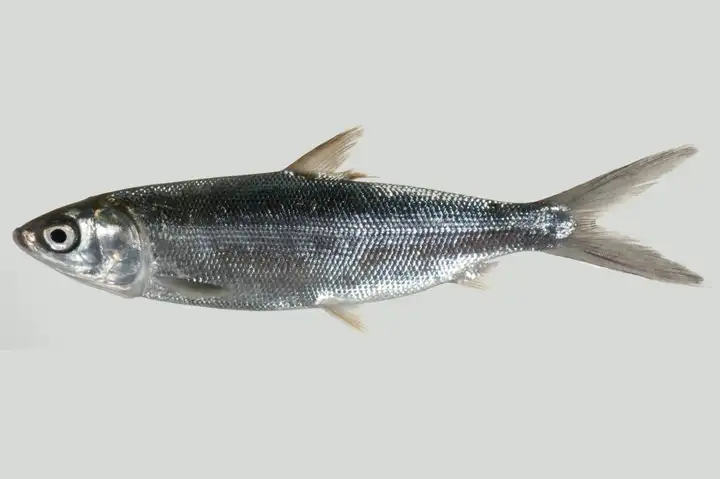 What is milkfish (Chanos chanos) and why is it ideal for coastal aquaculture?