 Marine Mitra
How to use feed attractants to improve shrimp appetite
త్వరిత సమాధానం · Quick answer
Feed attractants for shrimp include betaine (trimethylglycine), glycine, alanine, taurine, squid extract, and shrimp hydrolysate — all compounds that stimulate chemoreception (smell/taste receptors) in shrimp. Effective when: shrimp are off-feed due to stress, during disease recovery, at low-appetite periods (peak heat, after water exchange). Not effective as replacement for proper feed management.
మీ చెరువు పుస్తకం ఫోన్లో · Keep your pond's book on your phone Pond Book · Google Play
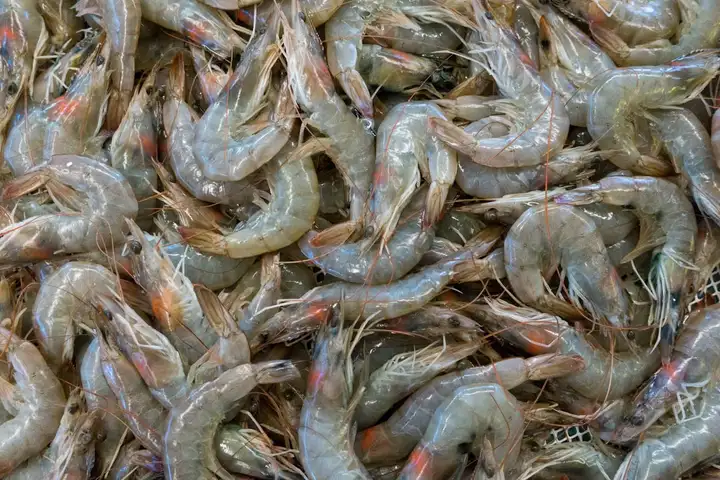
How shrimp find feed
Shrimp don't see well. They find food primarily through chemoreception — chemical sensing via sensory hairs on their antennae and mouthparts that detect specific molecules dissolving in water. Feed pellets release dissolved compounds as they hydrate, and shrimp follow the concentration gradient to the feed source.
Feed attractants are compounds added to feed (or applied directly to the pond surface) that amplify this chemical signal, stimulating feeding behaviour even when shrimp appetite is naturally reduced.
What actually works
Documented effective attractants for penaeid shrimp:
Betaine (trimethylglycine). The most well-researched attractant for shrimp. Dissolved betaine stimulates feeding response strongly at low concentrations. Standard inclusion in commercial shrimp feeds is 0.5-1.5% of feed weight. Can be added as a supplement at 1-2 g/kg of feed for extra stimulation.
Glycine and alanine. Free amino acids with demonstrated attractant properties. Present in squid meal and shrimp hydrolysate additives.
Squid meal and squid extract. High cost but strong attractant effect. Some premium shrimp feeds include 3-5% squid meal partly for nutrition and partly for palatability.
Shrimp head hydrolysate. Processed shrimp processing waste. Contains free amino acids and betaine-like compounds that create a strong feeding stimulation signal.
When attractants genuinely help
During disease recovery. Vibrio-affected shrimp that are off-feed can be coaxed back to feeding with attractant-enhanced feed during the recovery period after treatment.
Peak heat periods. Above 32°C water temperature, shrimp appetite naturally reduces. Attractant-enhanced feed or betaine addition maintains feed consumption during the 2-4 week summer peak.
After significant water exchange. Large (25%+) water exchanges briefly disrupt the pond's chemical environment. Shrimp can go off-feed for 12-24 hours after major exchanges. Attractant feed helps restore normal consumption faster.
When attractants don't help
If shrimp are not eating because of low dissolved oxygen, high ammonia, or active viral infection — fix the underlying problem first. A Vibrio-infected shrimp with empty gut and failing immune system will not respond to betaine addition. An oxygen-depleted pond where shrimp are surface-swimming will not respond to any feed stimulus.
 Can you use homemade feed for shrimp farming?