 Marine Mitra
How climate change is increasing disease risk in shrimp farms
త్వరిత సమాధానం · Quick answer
Climate change raises water temperature above 32°C more frequently, which accelerates Vibrio bacteria growth, weakens shrimp immunity, and destabilises pond water quality. Monsoon irregularity creates sudden salinity and pH swings that stress shrimp and lower their resistance. AP coastal farms are already seeing disease windows extend from 2 months to 4-5 months per year.
మీ చెరువు పుస్తకం ఫోన్లో · Keep your pond's book on your phone Pond Book · Google Play
What is actually changing
The traditional disease calendar for vannamei farming in Andhra Pradesh worked on rough predictability. WSSV risk was highest in cooler months (November-February). Vibrio pressure built from March. Monsoon flushed and reset water quality in June-September. Farmers planned stocking dates around these windows.
That calendar is getting messier. Pre-monsoon heat events lasting 3-4 weeks at 40-42°C ambient are now common in April-May along coastal AP. Water temperature in shallow ponds crosses 34-35°C on peak days — well above the 32°C threshold where Vibrio bacteria multiply faster than shrimp immunity can handle.
Monsoon onset is arriving 10-14 days later in most years and then dumping rainfall in compressed intense bursts rather than steady progression. This means no gradual salinity transition — it goes from 22 ppt to 8 ppt in 72 hours after a 200mm rainfall event, crashing plankton blooms and stressing shrimp simultaneously.
What this does to disease pressure
Vibrio thrives above 30°C. Dissolved oxygen crashes faster in warm water, creating anaerobic pond bottom conditions that feed Vibrio growth. The result: farms that previously had a 4-6 week vibrio window in March-April are now managing vibrio pressure from February through May — an extended 12-16 week window.
WSSV doesn't disappear in warm months — carrier birds and crustaceans are year-round. The cooler-month vulnerability spike is shifting because shrimp are heat-stressed in summer, making them more susceptible to secondary viral loads even during what was previously a "safe" season.
EHP spores in pond sediment survive longer in warmer bottom temperatures. Farmers who previously got a natural spore die-off between crops with a 20-day dry period are finding that dry-period temperatures are high enough to maintain spore viability.
What to adjust in management
Three practical shifts:
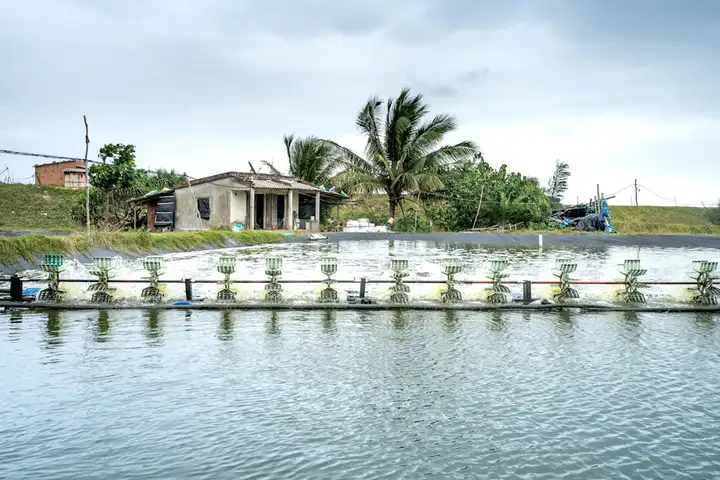
Time morning aeration. Pre-dawn (3-5 am) DO crashes are deeper and earlier in warm months. Aerators should run from 10 pm through 7 am rather than midnight to 6 am.
Move stocking dates earlier. Stocking in January-February instead of March-April means shrimp reach 15g+ before peak heat. Larger shrimp handle heat stress better than small ones.
Increase sampling frequency. Weekly cast-netting and feed tray checks should become twice weekly from March through June when conditions are most volatile.
 How to treat fungal infections in shrimp ponds