 Marine Mitra
Can you use homemade feed for shrimp farming?
త్వరిత సమాధానం · Quick answer
Homemade feed for vannamei shrimp is not recommended due to the technical precision required for amino acid balance, pellet stability, and vitamin inclusion levels. For freshwater carps, farm-made feed using rice bran, groundnut cake, and fish meal can work at semi-intensive levels. Vannamei FCR with home-made feed typically runs 2.2-3.0 vs 1.3-1.5 with commercial feed — making it economically non-competitive.
మీ చెరువు పుస్తకం ఫోన్లో · Keep your pond's book on your phone Pond Book · Google Play
Who actually uses homemade feed
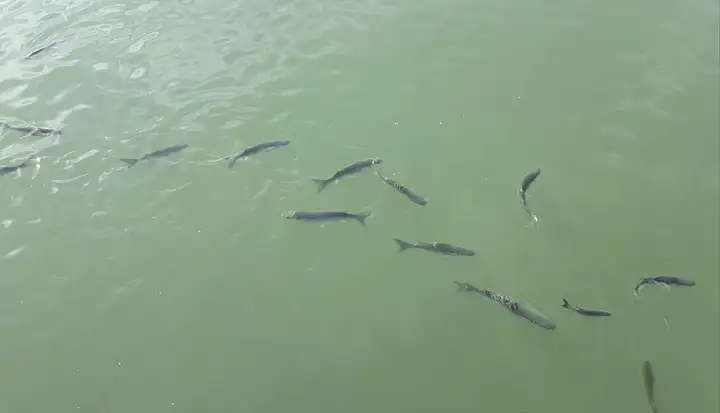
Homemade or farm-made feed is realistically practiced in two situations: traditional Indian Major Carp culture in freshwater ponds where a supplementary feed of rice bran, groundnut oil cake, and wheat flour is broadcast-fed at low densities, and small-scale prawn culture in Kerala and coastal Karnataka where a natural productivity approach with minimal supplementary feeding is used.
For semi-intensive and intensive vannamei shrimp culture in AP — where most of India's shrimp production sits — homemade feed is not practiced commercially and not recommended.
Why homemade feed doesn't work for vannamei
Vannamei nutritional requirements are specific. Crude protein of 36-45% depending on stage, with precise essential amino acid ratios — lysine at 2.1-2.5% of feed, methionine at 0.9-1.1%, threonine at 1.5-1.8%. Getting these ratios right without laboratory formulation is nearly impossible.
Pellet stability is the second barrier. Commercial extruded or pressure-pelleted shrimp feed maintains integrity in water for 90-120 minutes. Home-ground and hand-pressed feed typically disintegrates in 20-30 minutes, sinking to the pond bottom as organic sludge before shrimp can consume it. Feed efficiency drops dramatically and pond fouling increases.
Vitamin and mineral premixes are the third barrier. Commercial feeds include laboratory-grade vitamin C, B complex, fat-soluble vitamins, and mineral premixes at precise inclusion rates. These are not accessible for individual farm preparation.
For freshwater carps — where it does work
Traditional supplementary feeding for Indian Major Carps uses a 1:1 mixture of rice bran and groundnut oil cake broadcast at 2-3% of estimated body weight per day. This works because:
- IMC are omnivores with lower protein requirements (25-30% CP)
- They also feed on natural pond productivity (zooplankton, phytoplankton, benthos)
- The feeding is supplementary, not the sole source of nutrition
- Pellet stability doesn't matter for broadcast feeding in low-density carp ponds
The FCR reality check
For vannamei, compare: commercial feed at FCR 1.3-1.5 versus even optimally formulated farm-made feed at FCR 2.0-2.5+. On a 2-tonne harvest, that's an extra 1,400-2,000 kg of feed to achieve the same output — at whatever ingredient cost you're paying. Commercial feed is almost always cheaper per kg of production on a FCR basis.
 How to use feed attractants to improve shrimp appetite