 Marine Mitra
Why does benthic algae at the pond bottom hurt shrimp production?
త్వరిత సమాధానం · Quick answer
Benthic algae and filamentous algae growing on the pond bottom indicate water depth below 0.8 metres or persistent clear water, both of which lead to lower production. Dead benthic algae rots at the pond floor, dropping dissolved oxygen below 3 ppm overnight and creating disease risk.
మీ చెరువు పుస్తకం ఫోన్లో · Keep your pond's book on your phone Pond Book · Google Play
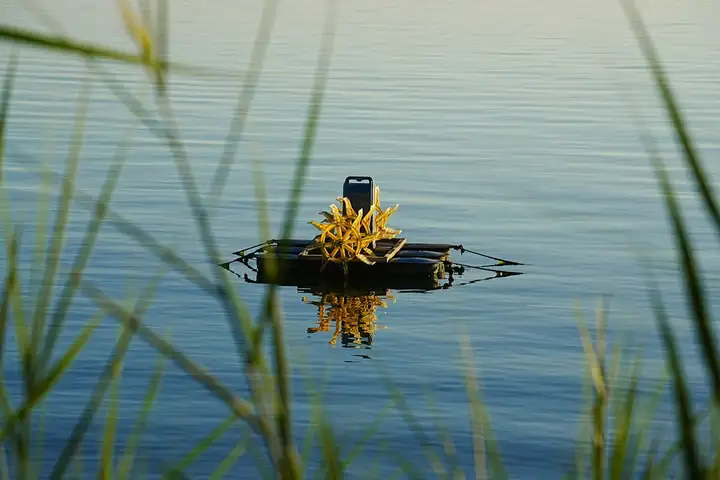
Why Benthic Algae Hurts Your Crop
It is day 28 of your vannamei pond in West Godavari. The water is clear enough that you can see the bottom, and a green carpet-like growth has developed across the pond floor. Many farmers think this looks healthy. The honest field truth: benthic algae at the pond bottom is a documented predictor of lower production and higher disease risk, and acting on it the same week makes the difference between a good crop and a stunted one.
Why Bottom Algae Is a Problem
Field studies on Indian shrimp ponds documented clear patterns. Clear water with benthic and filamentous algae leads to lower production. Ponds with dead benthic algae observed during culture are at risk of disease and poor production. Sufficient water must be kept in the pond to reduce risks of growth of benthic algae, with depth in the shallowest part at least 80 cm. Benthic algae develops when sunlight reaches the pond bottom, which happens when water is too clear or too shallow. The algal growth shades the soil, occupies the layer where shrimp hide during the day, and competes for oxygen at night when photosynthesis stops. When benthic algae crashes (dies suddenly), the dead biomass rots on the pond floor, consuming oxygen aggressively and releasing toxins that stress the shrimp directly. The signature of this is sudden mortality combined with floating algae mats.
The condition that triggers benthic algae growth on most farms is shallow water below 0.8 metre combined with clear, under-fertilised water at stocking and during early culture.
Steps to Take When Benthic Algae Appears
- Check pond depth at the shallowest point. If below 0.8 metre, top up water from a screened reservoir to bring depth to at least 1.0 metre.
- Build a stable plankton bloom in the water column to block light from reaching the bottom. Apply N and P fertiliser at 10 to 15 kg per hectare in split doses.
- If benthic algae is dense, manually remove what you can with rakes during partial water exchange, taking care not to break it into floating fragments.
- Increase aerator running hours to keep DO above 4 ppm at all times. Dead benthic algae crash can drop oxygen overnight.
- Monitor the pond for any floating dead algae mats over the next 7 days. If a crash occurs, run aerators continuously and exchange 20 percent water to flush dead biomass.
Field Observation
In our monitoring across coastal Andhra Pradesh farms, ponds maintaining a stable plankton bloom and depth above 1.0 metre rarely showed benthic algae problems. Ponds with persistent clear water or shallow areas faced bottom algae growth followed by crash events that lost 15 to 25 percent of stock.
 Why does alkalinity below 60 ppm cause pH instability in shrimp pond?