 Marine Mitra
Why do shrimp gather at pond edges during cloudy weather?
త్వరిత సమాధానం · Quick answer
Cloudy weather stops phytoplankton photosynthesis, which causes dissolved oxygen to drop below 4 ppm during daytime. Shrimp respond by moving to shallow edges where surface oxygen is slightly higher. Without immediate aeration and feed reduction, mortality can begin within 12 to 24 hours of persistent cloudy conditions.
మీ చెరువు పుస్తకం ఫోన్లో · Keep your pond's book on your phone Pond Book · Google Play
Why Cloudy Weather Causes Edge Crowding
It is mid-day at your vannamei pond in Krishna district. The sky has been overcast since dawn, and within hours you notice shrimp gathered along the pond bunds in clusters of 50 to 100. The middle of the pond looks empty. Most farmers think this is curious behaviour. The honest field truth: edge gathering during cloudy weather is the textbook signal of an oxygen problem developing right under your eyes, and the next 6 hours decide whether you lose stock.
Why Cloudy Weather Drops Oxygen
The phytoplankton bloom in a green water pond produces oxygen through photosynthesis during sunlight hours and consumes oxygen at night. On a normal sunny day, daytime oxygen rises to 7 to 9 ppm and supports the shrimp. On a cloudy day, photosynthesis slows or stops, but the bloom continues consuming oxygen along with bacterial breakdown of organic matter on the bottom. Dissolved oxygen below 3.2 ppm is dangerous and causes black gill disease followed by mass mortality. As DO drops below 4 ppm, shrimp move toward the surface or pond edges where there is some atmospheric exchange. Cloudy days also reduce water temperature and evaporation, leading to subtle behavioural changes including reduced feeding. Multiple cloudy days in a row are the most dangerous because nighttime oxygen depletion accumulates without daytime recovery.
The condition that triggers cloudy-day mortality on most farms is a heavy bloom (transparency below 25 cm) combined with poor aeration capacity and continued full-rate feeding through the cloudy period.
Steps to Take Right Now
- Test dissolved oxygen immediately. Anything below 4 ppm requires action within the hour.
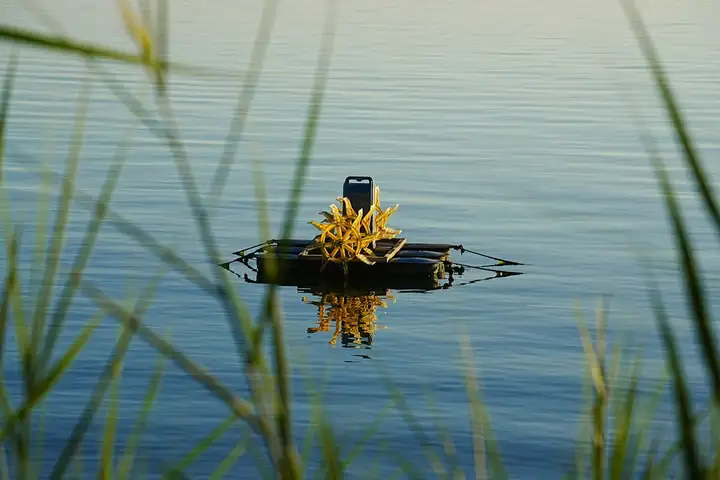
- Run all paddle wheel aerators continuously through the cloudy day and overnight. Add temporary aerators if available.
- Reduce daily feed by 50 percent for the cloudy period. Uneaten feed compounds the oxygen problem within hours.
- If the cloud cover is forecast to continue more than 2 days, exchange 15 to 20 percent water from a screened reservoir to break the bloom density.
- After clouds clear, retest pH, DO, and ammonia. Heavy blooms during cloud cover often crash within 24 to 48 hours of returning sunshine — be ready for that secondary risk.
Field Observation
In our monitoring across coastal Andhra Pradesh farms, ponds with proactive aeration and feed reduction during cloudy spells maintained survival without mortality. Farms that ignored edge gathering during overcast days lost 10 to 20 percent of stock to oxygen-driven mortality before the weather cleared.
 Why does alkalinity below 60 ppm cause pH instability in shrimp pond?
 Why does benthic algae at the pond bottom hurt shrimp production?