 Marine Mitra
What is the correct shrimp processing procedure from pond to cold storage?
త్వరిత సమాధానం · Quick answer
Ice shrimp at 1:1 ratio within 30 minutes of harvest to reduce body temperature below 5°C. Transport to processing facility within 4 hours. Wash, grade, dehead, peel, and devein as per product specification. Blast freeze to -40°C core temperature within 2 hours of processing. Store at -18°C in cold storage. Maintain cold chain — any temperature break above -15°C during storage or transport causes quality loss and increases rejection risk.
మీ చెరువు పుస్తకం ఫోన్లో · Keep your pond's book on your phone Pond Book · Google Play
Why Post-Harvest Handling Is Critical
Shrimp quality degrades rapidly after harvest. At body temperature (28 to 33°C), autolytic enzymes in shrimp tissue begin breaking down protein within 30 to 60 minutes of death. Bacteria on the shrimp surface — including Vibrio species from the pond — multiply rapidly at pond temperatures, causing melanosis (black spot development) and off-flavors within hours without adequate chilling.
The entire processing chain from pond harvest to frozen storage must maintain cold chain integrity to produce export-quality product. A single temperature break — shrimp left without ice for 2 hours in the sun between harvest and transport — can cause black spot development that fails visual inspection at the processing plant.
Step-by-Step Processing Protocol
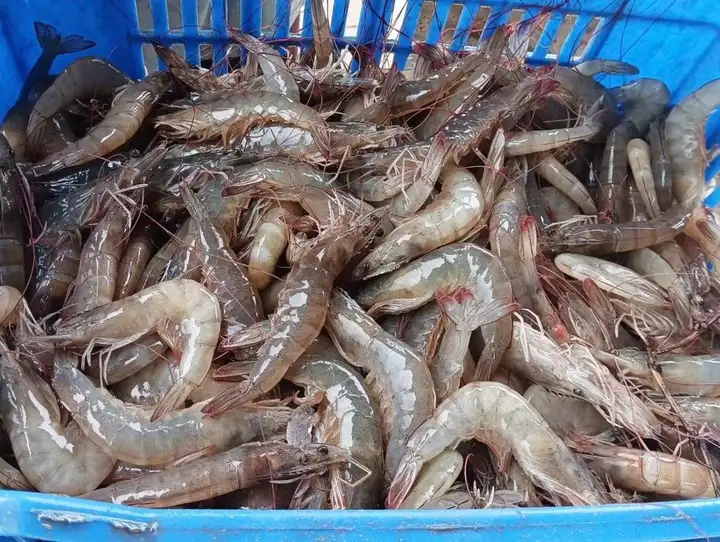
Step 1 — Harvest icing (pond, within 30 minutes): Add crushed ice to harvest containers at a 1:1 shrimp-to-ice ratio by weight immediately after netting shrimp from the pond. This drops shrimp body temperature below 5°C within 20 to 30 minutes, halting enzyme activity and bacterial multiplication.
Step 2 — Transport to processing facility (maximum 4 hours): Use insulated containers with continuous ice contact. Transport in refrigerated vehicles if distance exceeds 30 minutes from farm to facility. Shrimp must arrive at processing plant with body temperature below 5°C.
Step 3 — Washing: Wash shrimp in chilled clean water (water temperature below 5°C) with 5 to 10 ppm chlorine added. This removes surface bacteria, pond mud, and loose shell material.
Step 4 — Grading: Sort shrimp by count size (20-25, 26-30, 31-40 count etc.) using manual or mechanical graders. Remove undersized, damaged, or discolored shrimp.
Step 5 — Deheading and peeling: Dehead, peel, and devein according to product specification (HOSO, HLSO, PUD, PD, PTO depending on buyer requirements). All work surfaces and equipment must be food-grade and sanitized.
Step 6 — Final washing: Wash processed shrimp in chilled water (2 to 4°C). Some processors use citric acid wash (0.5% solution) to extend shelf life and prevent melanosis.
Step 7 — Weighing and packing: Weigh to target pack weight (typically 1 kg or 2 kg blocks). Pack in food-grade polybags, seal, and place in cartons.
Step 8 — Blast freezing: Blast freeze at -40°C until shrimp core temperature reaches -18°C or below — typically 2 to 4 hours depending on block size.
Step 9 — Cold storage: Store at -18°C or below. Shelf life of properly frozen shrimp: 12 to 18 months at -18°C with no temperature breaks.
Field Observation
Field observation: In our monitoring work across Andhra Pradesh farms, the most common post-harvest quality failure is inadequate icing between pond and processing facility. Farms that harvest in the morning but delay transport to the afternoon due to logistics or vehicle availability consistently deliver lower-quality shrimp. Schedule harvest to coincide with immediate vehicle availability — or invest in on-farm holding tanks with chilled water for short-duration holding.
 What is the shrimp count-to-size conversion — how many shrimp per kilogram at harvest?