 Marine Mitra
What are rotifers and how are they used in fish hatcheries?
త్వరిత సమాధానం · Quick answer
Rotifers are microscopic aquatic invertebrates (0.1-0.5 mm) of phylum Rotifera. In aquaculture, Brachionus plicatilis is the primary species cultured as first live feed for marine fish larvae (sea bass, milkfish, pompano, grouper) and some shellfish. They are small enough for newly hatched larvae to consume, nutritionally rich when enriched with DHA/EPA emulsions, and easy to mass-culture in simple tanks. Added to larval rearing tanks at 10-20 per mL density until larvae transition to Artemia nauplii (typically from 6 dph onwards).
What rotifers are
Rotifers are microscopic multicellular animals belonging to Phylum Rotifera. The name "rotifer" means "wheel-bearer" — referring to the crown of cilia around their mouth that creates a wheel-like spinning motion as they feed.
Key biology:
- Size: 0.1-0.5 mm — small enough for newly hatched fish larvae to ingest
- Reproduction: asexual (parthenogenesis) under good conditions — they clone themselves, allowing rapid population doubling
- Doubling time: 12-24 hours at 25-28°C
- Temperature range: 15-37°C (optimal 20-28°C)
- Salinity range: 1-35 ppt (B. plicatilis is highly euryhaline)
The primary species in aquaculture
Brachionus plicatilis is the dominant species cultured for aquaculture hatcheries. Two strains are available:
- L-type (large): 130-340 µm — suitable for slightly larger larvae
- S-type (small): 100-160 µm — suitable for very small newly hatched larvae (marine fish)
For marine fish with very small mouth gape at hatching (milkfish, sea bass, pompano), the S-type B. plicatilis is preferred.
Why rotifers are essential in marine hatcheries
Most marine fish larvae are 2-5 mm at hatching and can only consume food particles of 100-200 µm. Standard commercial feed particles are too large. The sequence is:
Newly hatched larvae → Rotifers (day 2-12) → Artemia nauplii (day 6-25) → Formulated feed (day 15+)
This is the universal marine larviculture sequence. Without rotifers as a bridge, larvae cannot begin feeding and starve within 72 hours of first feeding.
How rotifers are cultured on hatchery farms
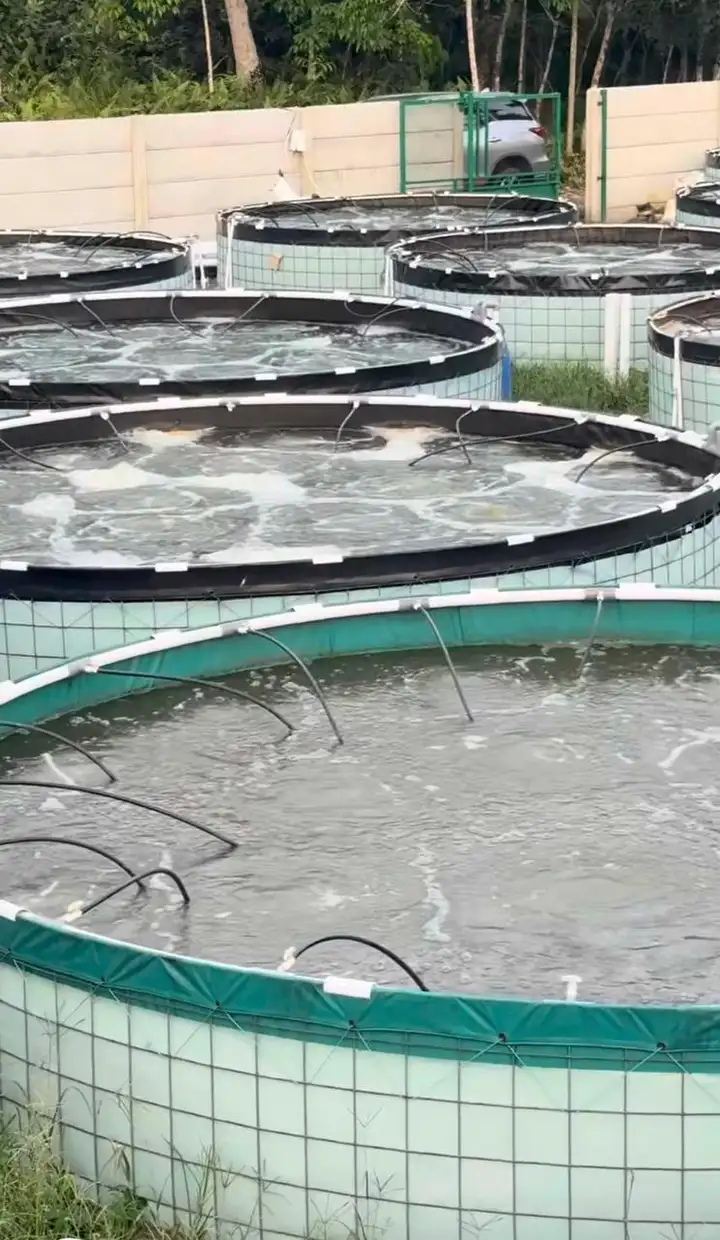
Mass culture system:
- Start culture in 200-500 L tanks with filtered seawater at 20-25 ppt salinity
- Inoculate with starter culture at 100-200 rotifers/mL
- Feed rotifers with concentrated microalgae (Nannochloropsis, Chlorella) or commercial rotifer diet
- Maintain aeration to keep rotifers suspended
- Harvest at 200-400 rotifers/mL — peak density before culture crashes
- Daily harvest and replacement maintains continuous supply
CIBA hatchery protocol (verified)
From CIBA Package 2021 on Asian seabass larviculture:
"After 36 hours of hatching, rotifers, Brachionus plicatilis and Brachionus rotundiformis are added in the rearing tank at a density of 15-20 no./ml per day until 12 dph."
Enrichment before feeding
Pure algae-fed rotifers are nutritionally incomplete — lacking sufficient DHA and EPA that marine fish larvae need for brain, eye and organ development. Before adding to larval tanks, rotifers must be enriched:
- Enrichment time: 6-12 hours with commercial lipid emulsion (Super Selco, HUFA Blend, DHA Protein)
- Result: Rotifers carry DHA/EPA into larvae on consumption
- DHA:EPA ratio target: 2:1 for most marine larvae
Enrichment is not optional — unenriched rotifers cause swim bladder and pigmentation problems in larvae.
 What is the effect of protein level on Penaeus indicus biofloc system?