 Marine Mitra
Complete guide to seaweed farming in Andhra Pradesh — from first step to first sale
త్వరిత సమాధానం · Quick answer
Complete seaweed farming guide for AP: Month 1 — register with DFO, attend training, apply for PMMSY subsidy. Month 2 — set up farm structure after work order, plant seed. Month 3 — monitor twice-weekly, manage site conditions. Month 4 — harvest at day 45, dry 3–5 days, contact buyer, sell. Year 1 target — 2 crops from 1 acre, ₹20,000–₹50,000 income. Year 2 target — scale to 2–3 acres, direct buyer relationship, ₹50,000–₹1 lakh income.
The Complete Journey — Month by Month
This guide puts everything together in the right sequence. Follow it and you will go from having never grown seaweed to having your first sale within 4 months.
Month 1 — Registration and Preparation
Week 1–2: Government registration
- Visit District Fisheries Office with Aadhaar, bank passbook, photograph
- Apply for Fisher Identity Card (if you do not have one)
- Ask for PMMSY seaweed farmer registration form
- Fill and submit the form
Week 2–3: Attend training
- Ask DFO for next seaweed training date
- Attend 2–3 day practical training at KVK or CMFRI
- This is where you learn rope handling, planting technique, disease identification, and drying method
Week 3–4: Subsidy application
- Submit PMMSY subsidy application with project proposal (species, area, location, cost estimate)
- Apply for crop insurance at the same time
- Apply for KCC fisheries loan if you need it
- Wait for written work order before buying any materials
Week 4: Site preparation
- Test salinity (above 25 ppt)
- Test water current (30–60 cm/s)
- Get coastal water use permission from DFO or local panchayat
- Contact MPEDA Visakhapatnam for buyer list in your district
Month 2 — Farm Setup and Planting
After work order received:
- Purchase equipment with bills (keep all receipts for subsidy verification)
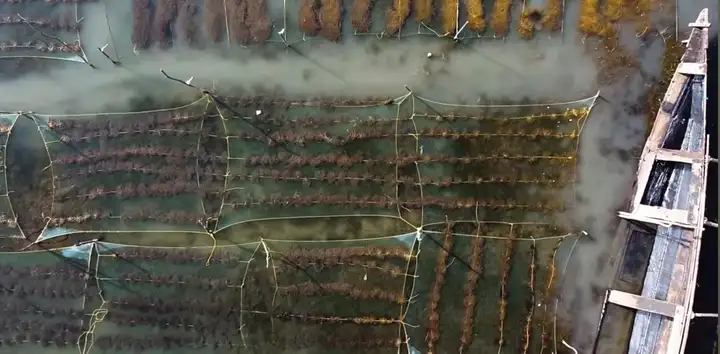
- Set up farm structure — monoline or SRFR method
- Install HDPE fencing net
- Identify and procure healthy seed material (60–80 kg per acre)
- Plant seed: insert 50–100g pieces every 15 cm on each cultivation rope
- Plant in early morning on a calm day
- Take dated photographs of the planted farm (needed for subsidy claim)
Month 3 — Growing Period
Visit the farm every 2–3 days:
- Check salinity — above 25 ppt
- Look for white patches on plants — early ice-ice warning
- Check ropes for breaks or tangles
- Check floats are in position
- Shake ropes to dislodge any epiphyte accumulation
- Check fencing net for holes
- Record all observations in your farm notebook
At day 20–25: Take 10 ropes and weigh them. Compare to planting weight. Should be double by now. If less, something is wrong — check salinity and current.
At day 35–40: Begin drying infrastructure preparation. Clean drying mats, confirm buyer is ready to receive in 10 days, arrange transport if needed.
Month 4 — Harvest, Dry, and Sell
Day 45: Harvest
- Cut plants leaving 5–10 cm base on each rope
- Collect in baskets, bring to shore
- Wash in clean seawater
- Spread on drying mats in direct sunlight
Days 46–50: Drying
- Turn morning and afternoon each day
- Check moisture by squeeze test daily
- Target: 35–39% moisture
Day 50–52: Sale
- Weigh dry seaweed accurately
- Pack in clean jute or net bags
- Deliver to buyer or arrange collection
- Collect payment — confirm it matches agreed price per kg × weight delivered
Day 52: Claim subsidy
- Submit subsidy claim to DFO with: receipts, dated farm photographs, harvest and sale records
- Subsidy transferred to bank account after verification
Year 1 Target
- 2 crops from 1 acre
- 150–250 kg dry seaweed total
- Income at ₹28/kg average: ₹4,200–₹7,000
- Plus subsidy received: ₹30,000–₹60,000 (one-time)
- Total Year 1 income: ₹35,000–₹67,000
Year 2 Target
- Scale to 2–3 acres
- 3 crops per year
- Direct buyer relationship established
- 300–600 kg dry per year
- Income at ₹30/kg: ₹9,000–₹18,000
- Net annual income Year 2: ₹50,000–₹1 lakh
The Final Message
Seaweed farming in Andhra Pradesh is not a complicated business. It is a patient one. The sea does most of the work — you provide the structure, the regular attention, and the good harvesting and drying practice.
The government provides the financial support to start. The buyers are waiting for your product. The training is free. The coastline is right outside your door.
Everything is ready. The next step is yours.
 Why does water current matter so much for seaweed farming and how do you check it?
 What is seaweed farming in Andhra Pradesh — a complete overview for beginners?