 Marine Mitra
How does pond culture differ from cage culture for shrimp and fish farming?
త్వరిత సమాధానం · Quick answer
Pond culture encloses fish or shrimp in a managed ecosystem where farmers control all water quality parameters. Cage culture suspends net enclosures in open water where natural currents handle water exchange. Pond culture suits Vannamei shrimp and freshwater carp. Cage culture suits marine and brackishwater finfish like barramundi, cobia, and grouper. Disease containment is easier in ponds; production cost is lower in cages for finfish.
మీ చెరువు పుస్తకం ఫోన్లో · Keep your pond's book on your phone Pond Book · Google Play
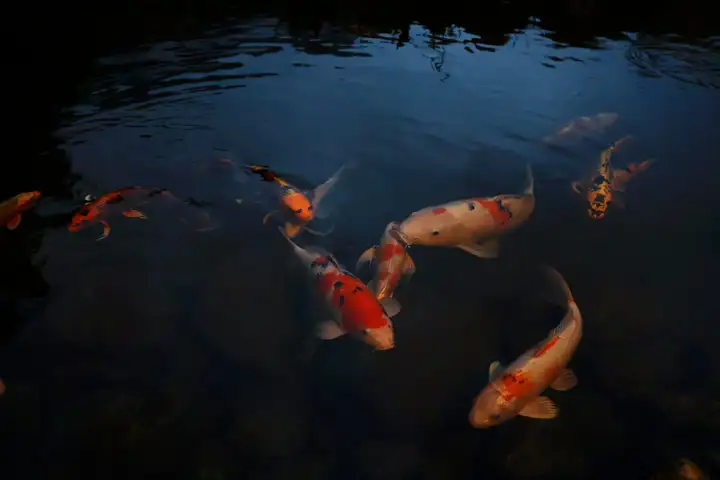
Pond Culture — Controlled Ecosystem Management
Pond culture is the most common aquaculture production method in India — it involves farming aquatic species in a bounded water body, whether earthen, concrete-lined, or HDPE-lined. The farmer has complete control over water quality, stocking density, feed inputs, and biosecurity.
Advantages of pond culture:
- Complete biosecurity control — can screen all intake water and contain disease outbreaks
- Full water quality management — aeration, water exchange, liming as needed
- Disease containment — infected pond water can be treated in situ before discharge
- Species flexibility — suitable for shrimp, freshwater carp, milkfish, brackishwater finfish
- Sludge collection and management possible between crops
Limitations of pond culture:
- Land cost — requires significant land area near water source
- Infrastructure cost — pond construction, aeration, water intake
- Waste accumulation — organic sludge accumulates requiring management between crops
- Limited natural water exchange — water quality management is entirely farmer-dependent
Best for: Litopenaeus vannamei, Penaeus monodon, Macrobrachium rosenbergii, Indian major carps, milkfish, mullet
Cage Culture — Open Water Production
Cage culture suspends net enclosures in open water bodies — coastal bays, estuaries, lakes, reservoirs — where natural water flow provides continuous oxygen supply and removes metabolic waste. Fish are confined in the cage but surrounded by the natural water body.
Advantages of cage culture:
- Lower infrastructure cost per unit — no pond construction, no aeration equipment
- Natural water exchange — oxygen and waste management handled by water current
- Scalable in open water areas where land is unavailable or expensive
- Higher stocking density possible in well-flushed locations
Limitations of cage culture:
- No biosecurity control — exposure to all pathogens in surrounding water
- Disease containment impossible — infected fish release pathogens directly into open water
- Weather vulnerability — storm damage to cage infrastructure
- Escape risk — damaged nets release fish into natural ecosystems
- Regulatory requirements — location permits, environmental impact assessment required
- Not suitable for shrimp — shrimp crawl out of cage netting
Best for: Barramundi (Lates calcarifer), cobia (Rachycentron canadum), grouper, pompano, milkfish (Chanos chanos)
Choosing Between Systems
| Factor | Pond Culture | Cage Culture |
|---|---|---|
| Land required | Yes — significant | No |
| Biosecurity | Complete control | None |
| Disease containment | Yes | No |
| Species range | Shrimp + finfish | Finfish only |
| Capital cost per ha | Higher | Lower |
| Water quality management | Farmer-controlled | Current-dependent |
Field Observation
Field observation: In our monitoring work along the Andhra Pradesh coastline, cage culture for barramundi and cobia in sheltered coastal bays is expanding slowly but faces significant regulatory uncertainty — coastal aquaculture zone permits, coastal regulation zone (CRZ) notifications, and fisheries department approvals create a complex compliance environment. Pond culture remains the dominant and most regulatory-straightforward production method for all Indian shrimp and most freshwater finfish culture.
Related Guides
- What is biofloc fish farming and how does it reduce water exchange in shrimp ponds?
- What is shrimp culture — intensive, semi-intensive, and extensive pond systems explained?
- How do I design a biofloc system for Vannamei shrimp in a small pond?
- What is composite fish culture and how does it work in Indian aquaculture ponds?