 Marine Mitra
What is composite fish culture and how does it work in Indian aquaculture ponds?
త్వరిత సమాధానం · Quick answer
Composite fish culture (polyculture) combines 5 to 6 species in one pond — typically Indian major carps (Catla, Rohu, Mrigal) and exotic carps (Silver carp, Grass carp, Common carp). Each species feeds at a different water level and on different food types. At stocking ratios of 3 to 5 fish per square meter, composite systems can produce 5,000 to 8,000 kg per hectare per year in Indian freshwater ponds.
మీ చెరువు పుస్తకం ఫోన్లో · Keep your pond's book on your phone Pond Book · Google Play
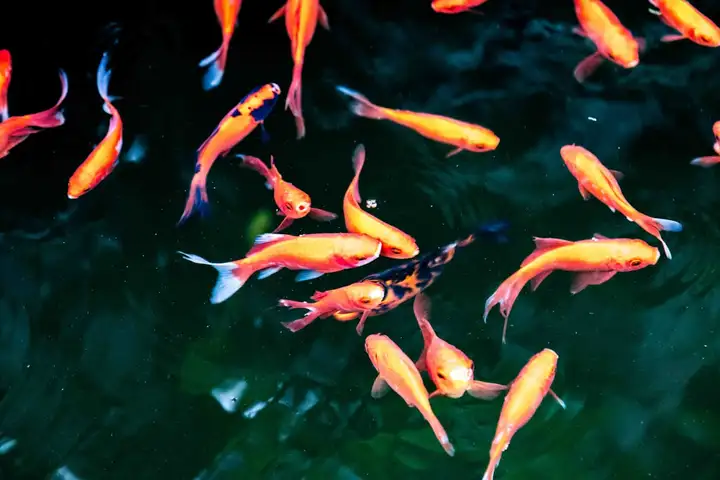
What Is Composite Fish Culture
Composite fish culture — also called polyculture or mixed fish farming — is the practice of simultaneously raising multiple fish species together in a single pond ecosystem. The core principle is ecological complementarity: each species exploits a different food resource and water level, so combining them achieves higher total productivity from the same pond area and water volume than any single species grown alone.
Composite fish culture is one of the most important freshwater aquaculture practices in India, developed and promoted extensively by the Central Inland Fisheries Research Institute (CIFRI) since the 1970s. It is practiced across inland freshwater ponds in states including Andhra Pradesh, West Bengal, Bihar, Odisha, and Karnataka.
The Ecological Basis of Composite Culture
A pond ecosystem has distinct food resources at three levels:
- Surface zone: Phytoplankton, zooplankton, surface insects
- Mid-water zone: Zooplankton, suspended organic particles
- Bottom zone: Bottom organisms, organic detritus, aquatic plants
By stocking species that specialize in each zone, composite culture harvests all available food resources simultaneously:
| Species | Feeding Zone | Primary Food |
|---|---|---|
| Catla (Catla catla) | Surface | Phytoplankton, zooplankton |
| Silver carp (Hypophthalmichthys molitrix) | Surface to mid | Phytoplankton |
| Rohu (Labeo rohita) | Mid-water | Zooplankton, submerged weeds |
| Grass carp (Ctenopharyngodon idella) | Mid to surface | Aquatic vegetation, terrestrial grass |
| Mrigal (Cirrhinus mrigala) | Bottom | Bottom organisms, detritus |
| Common carp (Cyprinus carpio) | Bottom | Bottom organisms, organic matter |
Standard Stocking Ratios in Indian Composite Culture
Typical stocking ratios for a 6-species composite system in Indian freshwater ponds:
- Catla: 30% of total stocking
- Rohu: 25%
- Mrigal: 15%
- Silver carp: 15%
- Grass carp: 10%
- Common carp: 5%
Total stocking: 3 to 5 fingerlings per square meter depending on pond productivity and supplementary feeding inputs.
With supplementary feeding (rice bran, mustard oil cake) and fertilization, composite pond systems in India achieve 5,000 to 8,000 kg of fish per hectare per year — significantly more than any single species would produce alone in the same pond.
Field Observation
Field observation: In our broader aquaculture monitoring work, composite fish culture ponds that integrate azolla or duckweed cultivation as supplementary feed for grass carp achieve 15 to 20% higher total production than ponds relying only on commercial supplementary feed — at significantly lower input cost. Integration of livestock waste (from poultry or cattle) as pond fertilizer is also widely practiced in inland composite culture systems in West Bengal and Bihar, creating a circular nutrient cycle.
 How do I design a biofloc system for Vannamei shrimp in a small pond?